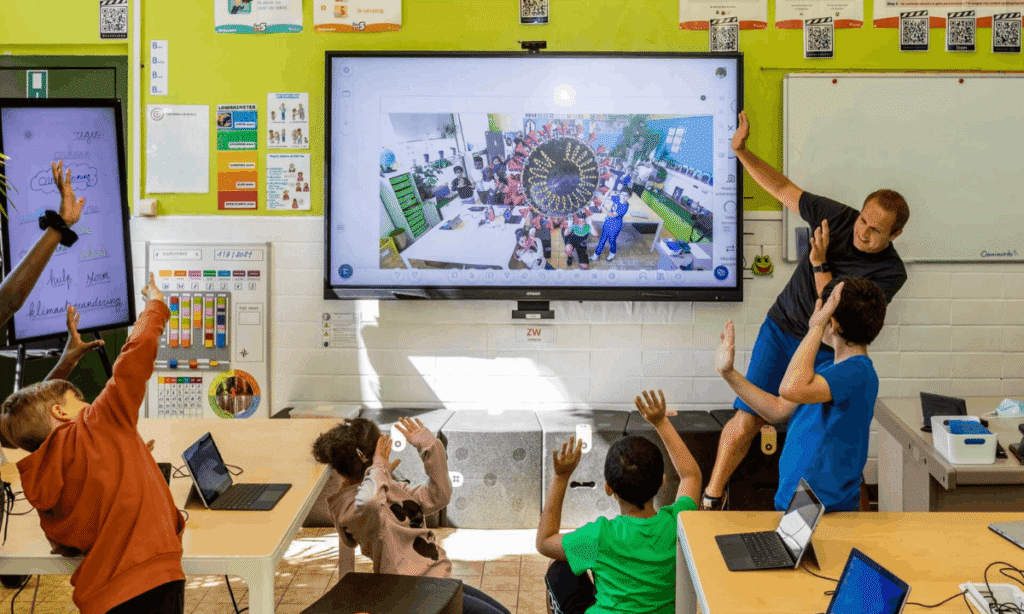
Say “Blooket” in a classroom and kids think hamsters, Gold Quest, whoever got robbed blind last round. Say it in the teachers’ lounge and you get a different answer: it’s the review game. Load some questions, pick a mode, watch a room full of twelve-year-olds turn a vocab quiz into something closer to a blood sport.
That’s the standard use, and it’s a good one — it’s why Blooket ended up in so many classrooms in the first place. But spend enough time actually talking to teachers and you start hearing about setups that have nothing to do with “review day before the test.” A two-minute warm-up. Homework kids do without being nagged. A trick for getting twenty-eight seven-year-olds to sit down and shut up after recess. None of it needs a plugin or a workaround. It’s just teachers noticing what the tool is actually good at and aiming it somewhere the help docs never mention.
Here are five of the better ones.
1. Bell-ringers instead of test-day marathons
Most people run Blooket long — fifteen, twenty minutes, the whole period. A growing number of teachers run it short instead: five questions, ninety seconds, first thing in the morning.
One middle school teacher does this daily. Five questions from yesterday, Classic mode, timer cranked way down, running while she takes attendance. That’s the whole routine. It replaced “everyone settle down and get your notes out” — five minutes of chaos that used to accomplish nothing — with kids walking in and going straight for a laptop.
The trick is that Blooket keeps your sets around. Build the question bank once per unit, trim it to five a day, swap a couple out each morning. After the first version exists, the daily habit costs almost no prep time at all.
2. Let the kids write the questions
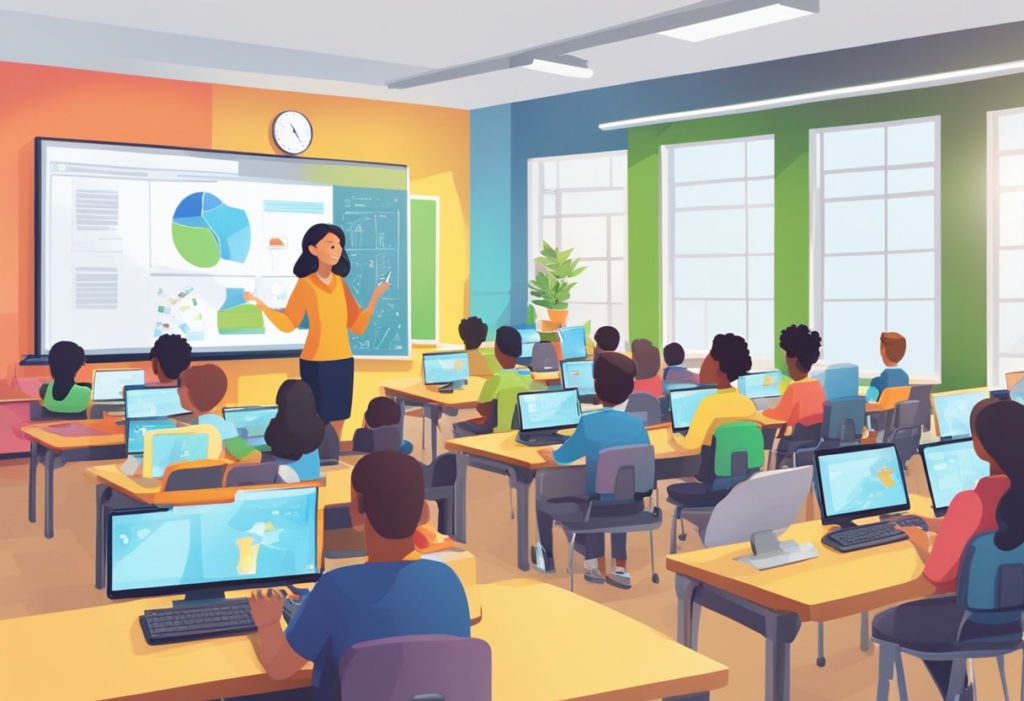
Here’s a feature most teachers never touch: anyone with an account can build a set, not just you. So some classrooms flip the whole dynamic. Small groups get a chapter or a chunk of reading, and their assignment is to write questions good enough to actually stump the rest of the class.
It does two things at once. Writing a decent multiple-choice question forces you to understand the material — you can’t fake it the way you can fake a summary paragraph. And it hands the teacher free formative assessment on a silver platter. A group that turns in three vague, confusing questions just told you, without meaning to, exactly where the lesson didn’t land.
Some teachers make it a standing assignment: each group owns one lesson, submits a set, gets a quick accuracy check, and then the whole class plays through everything combined right before the test. The review workload quietly shifts off the teacher’s desk and onto the students — and the students don’t seem to mind carrying it.
3. Use it to reset the room, not just teach content
This one’s about crowd control more than curriculum, and no one really admits that out loud. Teachers with younger grades, or classes that transition badly between activities, have started using short rounds as a reset button.
Instead of “quiet down, get your materials out” — which works about half the time on a good day — some teachers just project five questions tied to whatever was just taught and run it while everyone’s still shuffling back from recess. Blooket already comes with built-in momentum: countdown clock, sound effects, a leaderboard nobody can resist checking. That does a chunk of the classroom-management work a teacher would otherwise have to do by raising their voice over twenty-five side conversations.
A few elementary teachers also lean on the calmer, untimed modes as an early-finishers option — somewhere useful to send the kid who blew through the worksheet in four minutes and now needs an outlet that isn’t bothering the kid next to them.

4. Homework mode as actual practice, not just makeup work
Blooket markets Homework mode as a way for absent kids to catch up on a game they missed. Plenty of teachers ignore that framing and assign it on purpose, to the whole class, as independent practice that beats a worksheet on basically every front.
The reason it works is the feedback loop. Kids find out immediately whether they got something right, instead of turning in a worksheet and finding out two days later when it’s already useless. Some teachers assign a set the night before a quiz, then check the results the next morning question by question to see where the class actually got stuck. That changes what the first ten minutes of the next class look like — instead of reteaching an entire unit from scratch, you go straight at the two things that actually tripped people up.
Small shift, but it moves Blooket from “the fun thing we do sometimes” into something closer to a real practice tool that happens to also be a game.
5. Fold it into stations and centers
In classrooms running stations — common in elementary, creeping into middle school more each year — Blooket has become one rotation among several. Independent reading here, a worksheet station there, small-group time with the teacher, and Blooket as one more stop on the circuit.
It works because it doesn’t need babysitting. Queue a set on a couple of Chromebooks, give quick instructions, then go focus on the small group in front of you. Check on the Blooket station now and then, not constantly. Some teachers rotate the mode week to week so it doesn’t go stale — something quiet and self-paced one week, a live competitive round the next when the full group’s actually there together.
Used this way, Blooket stops being the reward at the end of a unit and becomes just another station — which is arguably the more honest test of whether a tool has actually earned a permanent spot in a classroom, instead of being a novelty that fades out by October.
What all five actually have in common
None of this needs anything beyond the free version most teachers already use. The thread connecting all five is that they treat Blooket less like a single-purpose trivia app and more like a flexible layer that can sit under almost any part of the school day — a warm-up, a transition, a homework set, a station, even an assessment the students build themselves.
The teachers who get the most out of it share one habit: they don’t save it for special occasions. They use it in small, frequent doses until it becomes part of the room’s rhythm instead of an event. That’s a pretty different picture from “the game we play before the test” — and it’s probably the real reason Blooket has stuck around in so many classrooms instead of fading out the moment the novelty wore off.
Disclaimer:
The content on Blooket.blog is intended for informational and educational purposes only. While we strive to keep information accurate and up to date, we make no guarantees about completeness or accuracy. Blooket.blog is an independent resource and is not officially affiliated with, endorsed by, or sponsored by Blooket unless otherwise stated.