
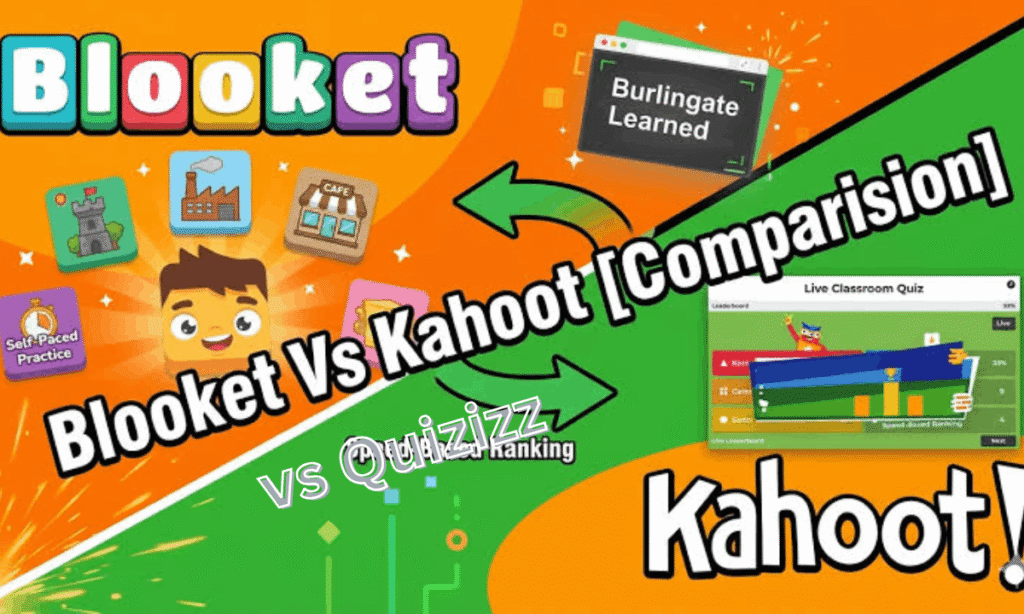
Every year, someone proclaims that one of these apps is finished. Every year, all three are still fighting over the same Tuesday-afternoon review slot in classrooms everywhere. That should tell you something: none of them actually lost. They just split the job three ways, and the “best” one depends on which job you’re hiring it for.
Here’s how Blooket, Kahoot, and Quizizz — now rebranded as Wayground — actually compare in 2026.
The Short Version
Blooket stands out for its free tier and diverse game modes, making it the best choice for routine reviews or independent homework sessions. Kahoot excels at live, real-time classroom engagement, though its full-class experience comes at a higher cost. Wayground wins if you want live games and self-paced homework living in the same app. None of them wins everything, and anyone telling you otherwise is oversimplifying.
Start With the Number That Rules Platforms Out Before the Fun Part Even Starts
Before comparing game modes or analytics, check how many students can actually join for free — because this quietly disqualifies platforms for a lot of teachers before anything else matters.
Kahoot’s free tier limits live games to 10 participants. That works for a study circle, but not for an entire classroom. Getting past it means paying: around $3 a month for the entry plan, though the tier most classroom teachers actually need — real analytics, assignments, no player cap — runs closer to $10 a month.
Blooket’s free tier doesn’t cap players in most game modes, so a full class of 60 can join without anyone getting locked out. Its one paid tier, Blooket Plus, runs about $5 a month and unlocks everything at once, rather than making you climb through pricing levels to find the features you need.
Wayground’s free tier is workable too, with paid upgrades mostly buying deeper reporting and premium content. Pricing has shifted some since the 2025 rebrand, so it’s worth a quick check before committing a school budget to it.
If cost and class size are your main constraints — and for most teachers, they are — Blooket clears that bar the most easily.
Three Different Bets on What Makes Review Fun
Kahoot was the first to arrive on the scene, launching back in 2013, and it shaped its whole brand around that game-show vibe: a single question displayed on screen, everyone jumping in simultaneously, and a leaderboard that updates constantly as the countdown soundtrack plays. The design is intentionally straightforward, and that very simplicity is what keeps it effective — there’s no need to walk a new group through anything, students immediately recognize the format the second they see it.
Blooket made a different bet: keep the questions the same, but change the game around them constantly. Instead of one format, it built out more than 20 — Tower Defense, Gold Quest, a café-management sim, a racing mode, and others — all running on the same quiz engine underneath. Pick a set, pick a mode, and you’re playing in under a minute. The bet pays off with classes that get bored fast, since the exact same vocabulary list can feel brand new just by switching modes.
Wayground took a third path. Its 2025 rebrand came with bigger ambitions than a name change: run live, synchronized games like Kahoot, but also offer a self-paced mode students can work through on their own time. It’s less about one killer format and more about covering both ends of how review actually gets assigned — in class and at home.
Where Each One Actually Earns Its Spot
A live, whole-class moment. This is Kahoot’s home turf, and nothing else here replicates it as well. The shared, synchronized leaderboard turns review into a moment the whole room experiences together — hard to fake, and worth the price tag if that’s specifically what you need ten minutes before a test.
Regular review that shouldn’t go stale. Blooket’s advantage shows up over a full semester, not in a single session. Because the game changes even when the content doesn’t, it holds up across weeks of review without going flat — and it works nearly as well solo as it does in a packed classroom, since the mode itself is the reward, not just the leaderboard position.
Solo or homework practice. Also Blooket, and it’s not close. A student playing Kahoot alone is just answering timed questions into the void. A student playing Blooket alone is still playing a game, working toward something. That also makes it a natural fit for younger students — collecting Blooks gives them a reason to care beyond just getting the answer right.
Live games and homework under one roof. This is Wayground’s case to make. If you don’t want to juggle separate apps for in-class rounds and take-home assignments, one platform covering both is worth something on its own — and its student-level analytics are arguably the strongest of the three for tracking individual progress over time.
The Fine Print Nobody Puts in the Marketing
Blooket’s public question library is crowdsourced, so like anything built by other teachers, some sets contain errors — write your own or double-check borrowed ones when accuracy really matters. Kahoot’s official content tends to be more consistently vetted, but you’re paying more to reach the tier where that consistency counts. Wayground, still settling into its post-rebrand identity, has the thinnest game-mode variety of the three, even with its stronger analytics.
None of these are dealbreakers by themselves. They’re the tradeoffs each platform made in exchange for being genuinely good at its one job.
What This Looks Like in a Real School Year
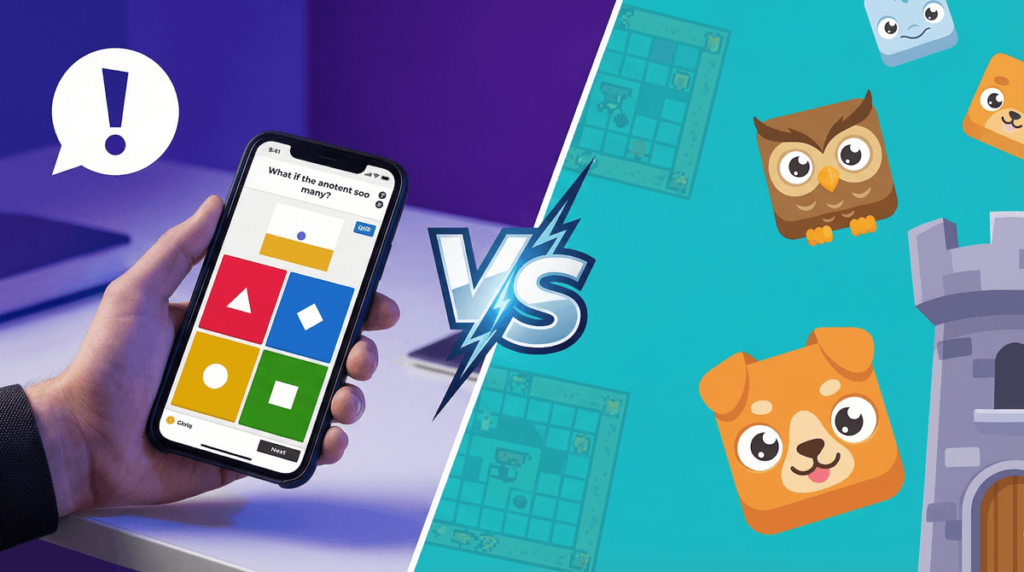
Most teachers don’t run just one of these all year. The pattern that comes up again and again: Blooket for everyday review because it’s free and doesn’t get old, Kahoot pulled out specifically for the big pre-test session where the shared leaderboard earns its keep, and Wayground showing up in classrooms built around assigned homework that want everything in one place.
That’s not indecision. It’s using each tool where it’s actually strongest instead of forcing one app to cover every situation it wasn’t built for.
The Bottom Line
For most classrooms, most of the time, Blooket wins on pure value — no player cap, the widest game variety, and a price that doesn’t punish you for teaching a full class. Kahoot still wins the specific moments that call for real, synchronized energy. Wayground comes out ahead if having a single platform that handles both live and self-paced work is more important to you than choosing one over the other.
Make your choice based on what your classroom genuinely requires this week, rather than which tool has the flashiest promotion. All three earned their place in this comparison for a reason — the job is matching the right one to the right moment.
Disclaimer:
This comparison reflects Blooket, Kahoot, and Wayground (Quizizz) as of publication. Pricing, player caps, and features change often and may differ by region or school plan. Always check each platform’s official site before making a purchasing decision.