

Some quiz tools feel like homework with a coat of paint. Blooket doesn’t, and I think that’s the whole reason it spread through schools so fast. The questions are ordinary. What you get for answering them isn’t.
The trouble is the sheer number of modes. Open the picker for the first time and it’s a wall of names, most of which tell you nothing. So this is my attempt at a sorted-out version: what each mode feels like, which ones I’d pick for which situation, and then a long section on Tower Defense, because that’s where I see people getting stuck. One warning before we start. Blooket adds, rotates, and retires modes, and some are seasonal, so treat anything here as a snapshot and check the live picker before planning a lesson.
[Your story here. How did you first find Blooket? Who showed it to you, or what was the first game you played?]
What a game looks like from the inside
You choose a question set, choose a mode, and hand out a join code at play.blooket.com. Everyone answers questions. What changes between modes is what a correct answer does. Sometimes it earns gold. Sometimes it buys a tower, feeds a cafe, or chips at a boss.
Some modes are timed and the biggest total wins. Others have you racing to a target or trying to last as long as you can. Plenty can be assigned as homework too, so kids can replay a set at home without you standing over them.
The game modes, grouped by how they feel
A flat alphabetical list is useless when you’ve got five minutes before the bell, so I’ve grouped these by feel.
Start with the simple ones. Classic is exactly what it sounds like: answer, climb the leaderboard. Racing moves your Blook along a track as you get things right. I’d use either with younger students, because you can explain the rules in a breath.
Then there’s the money-and-resources crowd. Gold Quest has you opening chests, and some of them let you grab gold from other players, which is where most of the shouting comes from. Cafe is a calm little restaurant sim where you buy upgrades as you earn. Factory is a slower build where your Blooks generate income over time. Crazy Kingdom asks you to manage a kingdom and live with your decisions. Crypto Hack is quick and a bit cutthroat, since you collect crypto and try to guess passwords to take other players’ coins.
The fighting modes are a different mood again. Tower Defense and Tower Defense 2 have you stopping waves of enemies. Tower of Doom is a climb upward through enemies. Battle Royale is last one standing. Monster Brawl is leveling up and fighting. Boss Battle puts the entire class on one side against one big enemy, which I find underrated.
And finally the odd ones: Deceptive Dinos, Fishing Frenzy, Pirate’s Voyage, and Tag. They each have a twist, and they’re good for when your class has seen the usual lineup too many times.
So which one is actually best?
I don’t think there’s an answer to that, and anyone who gives you one is guessing. It depends on who’s in the room.
If I need a fast review with no explaining, I go Classic or Racing. If the class is wired and needs somewhere to put the energy, Gold Quest. It’s the one most likely to get a whole room yelling, partly because the lead can flip right at the end. Some kids will hate that. Be ready.
For a quieter group, or kids who sulk when they lose in front of everyone, Cafe is kinder. Your score mostly comes from your own answers, so there’s less of the “he took my gold” drama.
When competition has been souring things lately, switch to Boss Battle and make everyone teammates. It takes the heat out in a way a pep talk never does.
Kids who like planning will gravitate to Tower Defense, Factory, or Crazy Kingdom. And for homework or solo practice, pick whatever you’re able to assign, since replaying a game beats rereading notes for most students.
One more thing I’d say. Students get tired of a format faster than they get tired of the material. Rotate the mode and the same set of questions can stay interesting for weeks.
[Your opinion here. Which mode is your personal favorite, and which one do you think is overrated?]
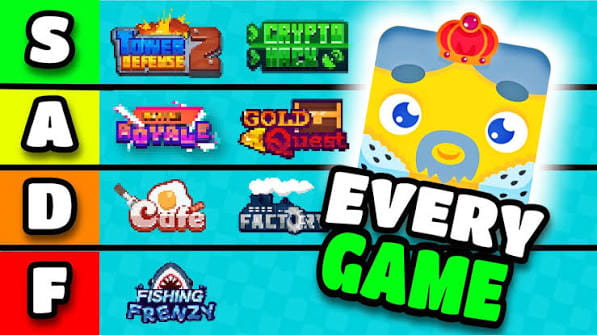
Blooket Tower Defense strategy
Okay, the part you probably came for.
The setup is simple. You answer questions to earn coins, then spend those coins on towers placed along the path the enemies walk. Enemies come in rounds, and each round is meaner than the last. If enough of them reach the end, you lose. Easy to grasp, hard to win consistently, and the gap between those two usually shows up somewhere around the middle rounds.
Your coins come from your answers
I’d put this first because it’s the mistake I’d bet is most common. People hammer through answers as fast as they can, get a bunch wrong, and then can’t work out why they’re broke. A wrong answer earns nothing. Reading the question properly costs you a second and usually pays back far more than that in coins. Think of accuracy as your income.
Don’t spend the second you can
The early rounds are forgiving. You’ve got room to bank a little instead of buying the first thing available. Holding coins for a few moments lets you afford a better tower or a meaningful upgrade, and a single strong tower tends to do more than a handful of weak ones scattered around.
Upgrade before you add
When you’ve got spare coins, ask whether you really need another tower or whether one you already own could be improved. Usually it’s the second. A well-placed tower that keeps getting upgraded tends to outperform a crowd of basic ones. Put money into what’s already working.
Study the path
Where you place things matters more than people think. Bends in the path are usually good spots, because enemies hang around in range longer as they turn. A tower on a long straight stretch gets only a short window to shoot. Before you buy, spend a few seconds actually looking at the map. Dropping towers wherever there’s empty space is how you end up with a defense that looks busy and does little.
Don’t build only one kind of tower
Towers play different roles. Some hit one target hard, some hit groups, and some slow enemies down. If everything you own does the same job, the first wave that happens to resist it will cause real trouble. Check what each tower does before buying, because stats and prices can change when the game updates, and anything I tell you here could go stale.
Get ready before it’s hard
Later rounds can ramp up quickly. If round five feels easy, that’s your signal to strengthen things, not to relax. The players who wait until they’re already losing health are playing from behind.
Don’t tilt
You will lose health at some point. Everybody does. What separates the players who recover is that they go back to answering carefully and rebuilding their coins, rather than panic-buying and clicking at random. A calm rebuild beats a frantic one nearly every time.
If you want a starting plan
Answer carefully through the early rounds and bank coins. Put your first towers on a bend. Upgrade those before buying many more. Add a second tower type to cover whatever the first can’t. Keep your accuracy up so the coins keep arriving. That’s it. It isn’t fancy, but it holds up.
[Your screenshot here. A map layout that worked for you, or one you lost on.]
For teachers
Play a mode yourself once before running it. Five minutes of testing beats twenty minutes of confusion in front of thirty students. Keep question sets short enough that kids finish them. Swap modes through the week. Use cooperative modes when the room is tense. And remember the game is only the hook, so spend a minute afterward on the questions students struggled with, because that’s where the learning is.
Wrapping up
What I like about Blooket is the range. A loud Gold Quest finish, a quiet Cafe session, a tense Tower Defense run, all from the same question set. Match the mode to the mood in the room, and change it when things go stale. If Tower Defense is what you’re after, the short version is to answer carefully first and spend wisely second.
disclaimer
Blooket.blog is an independent website and is not affiliated with, endorsed by, or sponsored by Blooket LLC. Game modes, features, and pricing change often, so details here may be out of date. Please check the official Blooket website or app for the latest information.

Pingback: Blooket Game Modes List: Best Modes to Play + Tower Defense.