
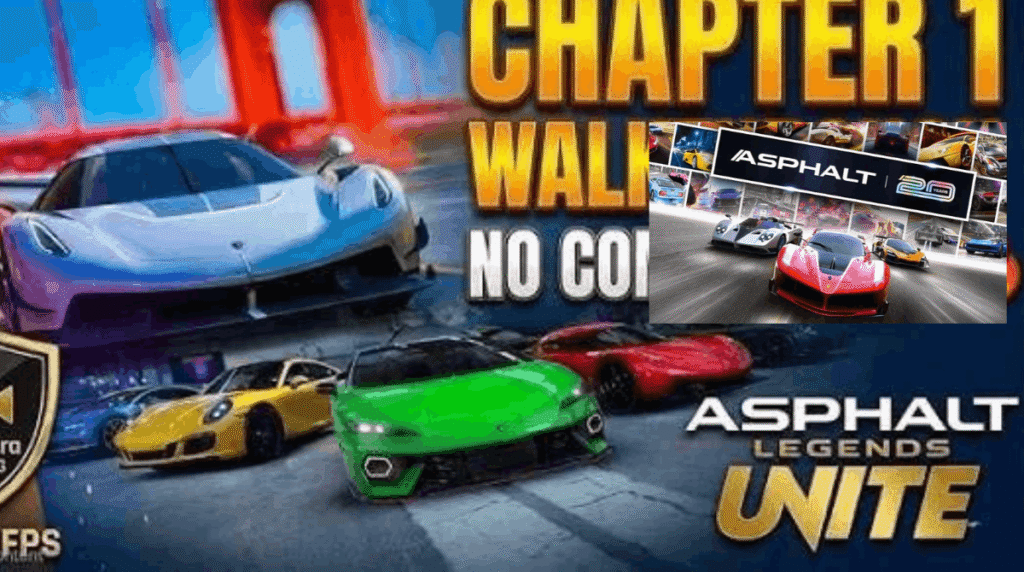
There’s always a gap between what a game‘s store listing tells you and what actually happens once you’re driving. “Hundreds of cars, dozens of tracks, online multiplayer” — sure, fine, but that’s marketing copy, not gameplay. So let’s skip past all of that and get into what a race in Asphalt Legends actually feels like from the driver’s seat.
Steering Isn’t Really the Point
First thing that surprises most people: you barely steer. The default control scheme, TouchDrive, handles acceleration and lane positioning on its own, following the ideal line through the track automatically. Your job is timing, not aiming. Swipe when the road forks to pick a path, hold your thumb down when you want nitro. That’s most of the input the game asks of you.
It sounds like it should feel hollow. It doesn’t. Once the game takes steering off your plate, what’s left is a constant stream of small, fast decisions — take the narrow shortcut or stay in the open lane, commit to that ramp or play it safe, save your boost for two corners from now or use it right this second. That’s where the actual skill lives. Not in keeping the car between the lines.
For anyone who wants more than that, manual mode is right there waiting. Turn it on and you’re doing everything yourself — real steering, real braking, real cornering, with controller or keyboard support if you’ve got the hardware. Drift a corner in manual and it’s on you, not the game quietly cleaning it up in the background. Some players never touch manual and have a great time regardless. Others get hooked on it the second they try it and never go back to TouchDrive. Neither choice is wrong. They’re genuinely two different ways of experiencing the same race.

The Whole Game Is Built Around One Bar Filling Up
If you only remember one mechanic from this article, make it nitro. It’s not a bonus system bolted onto the racing — it basically is the racing. You build it up by drifting, tucking in behind another car to draft, launching off stunt ramps, and cutting close calls with traffic that make you flinch a little.
Fill the bar and you’ve got choices. Tap it for a fast burst. Hold it longer for perfect nitro — a bigger, longer boost that also makes you temporarily immune to collisions. That immunity is the part that actually changes how races feel. Eight cars funneling into one narrow gap normally means somebody’s crashing. Pop perfect nitro at the right moment and you just plow straight through the entire mess untouched, coming out the other side still at top speed while everyone behind you sorts out the wreckage.
The real skill isn’t hitting the nitro button. It’s not hitting it. New players see a full bar and burn it the second it’s available because why wouldn’t you. Better players sit on it, waiting for the long straight three corners up ahead, or holding it specifically for the chokepoint where the whole pack is about to jam up together. Patience turns out to matter more than reflexes here.
Ground Is Optional, Apparently
This isn’t a racer that keeps things grounded for the sake of realism. Ramps show up constantly, and cars catch real air — sometimes a quick hop, sometimes long enough that the game is clearly expecting you to do something with the hang time. Barrel rolls, full spins, whatever fits before you land, and all of it dumps more nitro into your tank as a reward.
The first few times, it feels almost unnecessary. Then it stops feeling that way and turns into one of the genuinely satisfying parts of playing. Landing a clean triple roll off a big jump and watching the nitro bar jump with it hits a spot that pure speed alone doesn’t.
Drifting works the same way — it’s not decoration, it’s mechanically load-bearing. Hold through a turn, the car breaks sideways, and the tighter and longer you hold it, the more nitro you’re banking. Chain a few drifts together through back-to-back corners and something shifts in how you’re playing. You’re not reacting to each turn as it comes anymore. You’re already three corners ahead, planning the chain before you’ve even hit the first one.

Bots Are Fine. People Are Where It Gets Good.
Career mode against AI does the job — plenty of races, plenty of hours if you want them. But it’s not really where this game earns its reputation. That happens in multiplayer, up to eight racers at once, against actual people instead of scripted opponents.
The difference is obvious almost immediately. AI opponents run the same lines every time, make the same predictable mistakes, and after a while you stop paying attention to them entirely. Real players won’t let you get comfortable like that. They cut off the shortcut you were counting on. They bait you into wasting your nitro chasing a gap that was never really there. They land a stunt combo out of nowhere that you had no way of seeing coming. It’s messier, less predictable, and genuinely more tense — which is exactly why running the same track for the fiftieth time in multiplayer still doesn’t feel like the forty-ninth.
Split-screen exists for racing someone sitting next to you. Private lobbies let you set your own rules instead of rolling the dice on matchmaking. Clubs add a longer-term layer on top of all of it, turning individual races into something that contributes to a group effort instead of just your own scoreboard.
Why This Hasn’t Gotten Old
None of this is complicated when you break it down, and that’s kind of the point. Races run two or three minutes, so “one more” is never a real ask of your time. Every second inside that short window is active — you’re always deciding something, never just watching the car drive itself through empty space. And because manual and TouchDrive sit side by side as equally valid ways to play, the game somehow works for someone who downloaded it an hour ago and for someone who’s spent years perfecting drift chains and nitro timing without either one feeling like the “wrong” way to play.
That balance is harder to hit than it sounds. Plenty of mobile racers strip out the skill entirely to stay approachable, and plenty of others bury new players under controls that send them running in the first five minutes. This one found the middle and just stayed there.
At the end of the day, it was never really about the number of cars in the garage or how many tracks are on the list. It’s that one specific moment — full nitro bar, gap closing fast, half a second to decide — and how good it feels every single time you get that call right.

Disclaimer
This article is based on publicly available information about Asphalt Legends (formerly Asphalt 9: Legends) gameplay. It’s an independent, unofficial piece and isn’t affiliated with or endorsed by Gameloft. Asphalt Legends is a trademark of Gameloft.

