
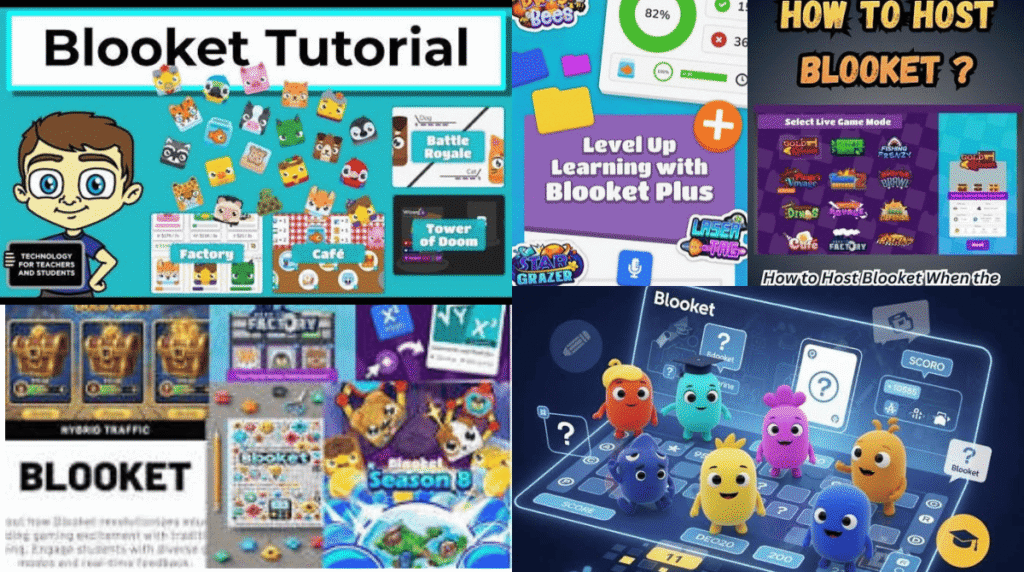
Most teachers pick a Blooket mode the way people pick a seat at a restaurant: whatever looks fun that day. That works fine, honestly. But after you’ve run a few games, you start to notice something. Some modes make a subject feel easy, and others quietly fight against it.
A mode that rewards speed can ruin a math lesson where kids need to think. A mode with long pauses between questions can drain the energy out of a vocabulary review. The question set stays the same, but the experience changes completely.
So here’s how I’d match modes to three subjects that come up all the time: math, vocabulary, and history. Modes get added and tweaked over time, so check what’s currently in your host menu.
Why the mode matters more than people think
Blooket’s trick is that the questions and the game are separate layers. You write a set of questions once, then wrap it in different games. The questions are the learning. The mode is the pacing, the pressure, and the reward.
That means you’re really choosing three things:
- How often students see questions. Some modes throw a question at you every few seconds. Others give you a question, then a long stretch of game stuff.
- How much luck is involved. Some modes let a struggling student catch up through random events. Others reward steady accuracy.
- Whether students compete or cooperate. This changes the mood of the room more than you’d expect.
Keep those three in mind and the rest gets easier.
Best Blooket game modes for math
Math is the subject where I’d be most careful, because rushing causes mistakes, and mistakes cause frustration. You want a mode where students can answer at their own pace without feeling punished for thinking.
Tower Defense is a strong pick. Students answer questions to earn coins, then spend those coins on towers. Because there’s a build phase between questions, kids get a moment to breathe, and the strategy gives the math a purpose. It works well for multi-step problems, like solving equations or working through fractions, since nobody feels like the clock is chasing them.
Cafe is great for basic fluency. Students answer to serve customers, restock food, and earn money. Think multiplication facts, quick addition, or order of operations. It rewards steady accuracy, and the cafe theme is calming enough that anxious math students tend to relax into it.
Factory suits math too, especially for review. Correct answers unlock and upgrade machines that earn income. It’s repetitive in a good way. Kids who need extra practice get plenty of it without realizing it’s practice.
What I’d avoid for math: anything where the main score swing comes from pure luck. In some modes, a lucky chest can wipe out a student’s lead. For a vocabulary quiz, that’s no big deal. For a math unit test review, it can leave a kid who answered everything right feeling cheated.
A small tip: write your math questions so they can be solved in under thirty seconds. If a problem needs scratch paper and five minutes, put it in a different activity. Blooket is best for retrieval practice, meaning pulling a skill out of memory, rather than first-time learning.
Best Blooket game modes for vocabulary
Vocabulary is the opposite of math in one key way. Speed helps here. Either you know the word or you don’t, and quick repeated exposure is exactly how words stick.
Gold Quest is probably the crowd favorite, and for good reason. Students answer a question, then open a chest that might give them gold or let them steal from a classmate. It’s loud, chaotic, and funny. With vocabulary, that chaos is useful because kids see a lot of questions in a short time, and the stealing mechanic keeps everyone leaning in, even the students who are behind.
Racing is simple and brilliant for word work. Answer correctly and your character moves forward. That’s it. No complicated rules to explain, which is a real advantage when you’ve got twenty-eight students and ten minutes left in class. It’s ideal for synonyms, antonyms, definitions, and spelling choices.
Crazy Kingdom adds a bit of decision-making on top of the questions. Students answer, then make choices to grow their kingdom. For older students learning Tier 2 and Tier 3 words, it keeps things interesting without slowing the question flow too much.
One thing I’d recommend: mix question types inside your set. Don’t only ask “What does this word mean?” Try fill-in-the-blank sentences, “which word does NOT belong,” and context-clue questions. Blooket lets you build all of these, and the variety makes the mode feel fresh even if you play it three days in a row.
If you want something calmer, Fishing Frenzy works nicely for a quieter review session. Students answer to cast and reel in fish, and the pace feels relaxed.
Best Blooket game modes for history
History is tricky because it’s less about quick recall and more about connecting events, people, and causes. But the facts still matter, and Blooket is excellent for locking down dates, vocabulary, geography, and key figures.
Tower of Doom and similar adventure-style modes work well for history. The boss-battle and quest framing fits naturally with topics like medieval Europe, ancient civilizations, or wars. Kids love the story feel, and it’s an easy way to add a little drama to a lesson that might otherwise feel dry.
Battle Royale brings some real competition, which can be fun for a unit review the day before an exam. Students answer questions to stay in the fight. Because it’s high energy, I’d save it for topics students already feel decent about. Using it on brand-new material can leave weaker students feeling lost.
Crypto Hack is a fun one for history if you’re reviewing something with lots of names and terms, like the causes of World War I or the branches of government. The hacking theme gets older students engaged, especially middle schoolers who think everything else is “for little kids.”
For history specifically, I’d suggest using images. Add a map, a primary source excerpt, or a photo of an artifact to your questions. A student who answers “Which empire controlled this territory?” while looking at a real map learns far more than one reading a plain text question.
And don’t forget the Homework mode. You can assign a set with a due date, and students work through it on their own time. For history, that’s a good way to front-load names and dates before the class discussion, so your actual lesson time goes to the more interesting “why did this happen” conversations.
Matching mode to purpose
Here’s a quick way to think about it. Ask yourself what you’re trying to get out of the session.
- Building fluency? Pick something with constant questions, like Racing or Cafe.
- Reviewing for a test? Pick something with energy and a little competition, like Gold Quest or Battle Royale.
- Teaching careful thinking? Pick something with breathing room, like Tower Defense.
- Introducing a topic? Skip the competitive modes. Try Homework mode or a relaxed solo run first.
A few mistakes I see all the time
Playing the same mode forever. Kids get bored, and boredom is the enemy of retention. Rotate modes every week or two.
Making sets too long. Fifteen to twenty-five questions is plenty. Any longer and attention fades, especially in live games.
Ignoring the reports. Blooket shows you which questions students missed most. That’s gold for planning your next lesson. If half the room missed the same vocabulary word, you’ve just learned what to reteach tomorrow.
Forgetting that fun isn’t the goal. Fun is the vehicle. The goal is that students remember the material next week. If a mode is so exciting that nobody reads the questions, switch it up.
Final thoughts
There’s no single best Blooket mode. There’s only the best one for what you’re teaching today. Math tends to like modes with breathing room, vocabulary thrives on speed and repetition, and history gets a boost from story-driven games and visuals.
Try one new mode this week with a subject you already teach. Watch how the room changes. You’ll learn more from fifteen minutes of that than from any list, including this one.
Disclaimer:
Blooket.blog is an independent blog and is not affiliated with, endorsed by, or sponsored by Blooket. Blooket and its game modes are trademarks of their respective owners. Game modes, features, and availability change over time, so check Blooket’s official website or your host menu for the most current information.

Pingback: blooket.blog Blooket Free vs Blooket Plus: Is It Worth It?