
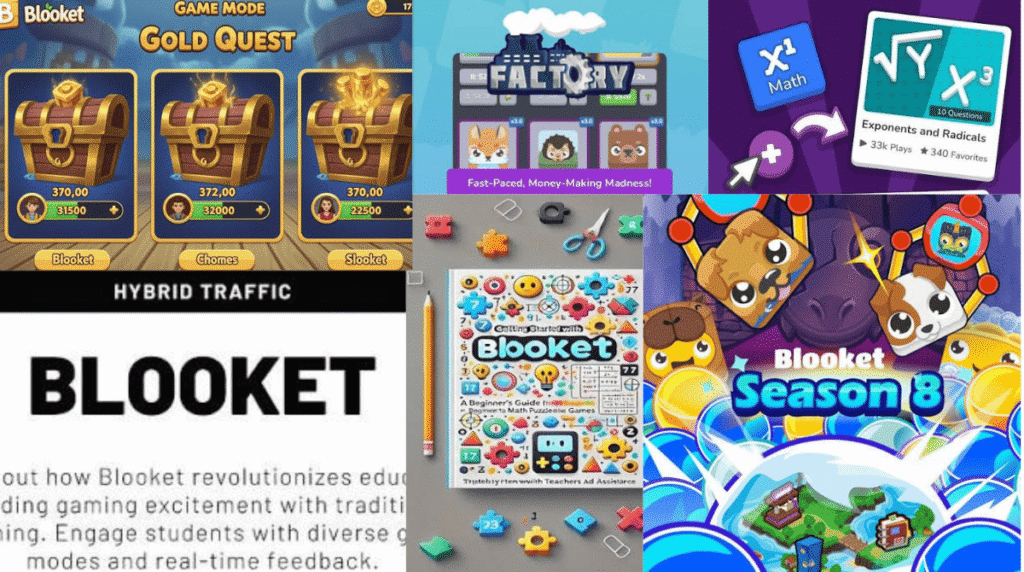
I once ran a vocabulary review in Tower Defense because my students loved it. It was a mess. They spent so much time arguing about where to put towers that the words barely registered. The next day I ran the same question set in Cafe, and the room went quiet in a good way. Same questions, completely different result.
That’s when I stopped treating the game mode as decoration. Here’s what I’ve figured out about which modes fit math, vocabulary, and history.
Start with this question
Before picking a mode, ask yourself how much thinking each question needs.
If students can answer in two seconds (7 x 8, or what “benevolent” means), a fast mode works. If they need to chew on it (why did the Roman Republic collapse?), the game has to give them room. Most bad Blooket sessions come from ignoring this. Speed games punish careful thinking, and slow games make quick recall feel tedious.
Math
Math is where speed modes shine, but only for skills kids already understand. If they’re still learning how to multiply fractions, a race just teaches them to panic faster.
Racing is my go-to for fact fluency. Answer, move forward, repeat. There’s nothing to figure out, so all the attention stays on the math. I use it for five or ten minutes at the start of class, and it’s a great warm-up.
Gold Quest is what I pick when I want chaos. Correct answers earn a chest, and chests can give you gold or let you steal it. A student who’s behind can leapfrog the whole class in one lucky pick, so the kids who usually check out stay in the game. It’s loud, and it works well for end-of-unit review.
Tower Defense suits multi-step problems, like two-step equations or word problems. After each answer you spend coins on towers, and that little break between questions gives students a moment to breathe. Rushed algebra is usually wrong algebra, so I like that.
Factory is a slower build. Students unlock blooks that earn income over time, so it rewards steady play. I save it for longer practice blocks.
One thing I’d pass on: keep math questions short in the fast modes. A long word problem in Racing just gets skipped. Put those in a slower mode or in a homework game.
Vocabulary
Vocabulary needs repetition more than anything. A word has to show up many times before it sticks, and the best Blooket modes for it are the ones where kids don’t notice how many questions they’re answering.
Cafe is my favorite. Students serve customers by answering questions, then stock food and upgrade the shop with what they earn. It’s calm, nobody gets knocked out, and the questions keep flowing. I’ve had students go through a whole 40-word set without complaining, which never happens with worksheets.
Classic is the plain quiz format, and it gets overlooked because it’s plain. When you’re introducing a brand-new word list, plain is what you want. Students see the right answer right away, with no game getting in the way.
Fishing Frenzy suits relaxed review days. Students answer, cast, reel in fish, and watch their totals grow. It’s low-stakes, which helps with vocabulary because anxious students second-guess words they actually know.
Crypto Hack is more of a gamble. Students earn crypto by answering, then try to hack other players by guessing their passwords. It’s exciting, but the guessing can pull attention away from the words, so I use it only when the class already knows the material and just needs a fun finish.
Whatever mode you choose, put effort into the wrong answers. If the distractors are obviously silly, students can pick the right one without knowing the word. If they’re close in meaning, kids have to think. That matters more than any game mechanic.
History
History is the trickiest because the questions vary so much. A date question and a “why did this happen” question are different animals, and one mode rarely handles both.
Tower of Doom is good for chronology and key figures. Students fight their way up through floors, so there’s a real sense of moving forward, which pairs nicely with a timeline unit. I’ve used it for the American Revolution, and the progression felt natural.
Crazy Kingdom is the one I’d use for units about how societies run, like trade, empires, or government. Students manage a kingdom and make resource decisions between questions. It’s not a perfect simulation, but it gets kids thinking about trade-offs, which is half of what history is.
Deceptive Dinos has students digging up fossils and trading them. It’s a stretch for most history topics, but it fits archaeology and ancient civilizations well, and the novelty keeps dense content from feeling dry.
Battle Royale works for rapid-fire recall, like a dates-and-names blitz. I use it rarely, though. Competitive pressure makes students skim, and history questions often hide the answer in the wording.
The biggest improvement you can make in history sets has nothing to do with modes. Stop writing 30 “what year did X happen” questions. Mix in causes, effects, and “which of these came first” questions. Then even a fast mode ends up reviewing ideas instead of trivia.
Things that hold up in every subject
Know why you’re playing. Introducing, practicing, and reviewing are different jobs. Calm modes for introducing, fast modes for practice, wild modes for review.
Keep it short. Around ten to fifteen minutes is the sweet spot. After that, attention drops and the last questions barely get read.
Think about group size. Some modes feel empty with a small group and chaotic with a big one. With a handful of students, go for the more strategic modes. With a full class, simpler ones hold up better.
Rotate. Students will tell you when they’re tired of a mode, usually loudly. Switch it up even if the question set stays the same.
Try it yourself first. Five minutes in a mode will tell you more about its pacing than any description will.
The short version
- Math: Racing for speed, Tower Defense for multi-step problems, Gold Quest for review.
- Vocabulary: Classic to introduce, Cafe for repetition, Fishing Frenzy for easy review.
- History: Tower of Doom for timelines, Crazy Kingdom for big themes, a competitive mode now and then for quick recall.
These aren’t rules. Blooket adds modes, and your students will have favorites that surprise you. But if you start with how much thinking each question needs, you’ll land on a good mode far more often than you will by guessing.
DISCLAIMER
Blooket.blog is an independent resource and is not affiliated with, endorsed by, or sponsored by Blooket. Blooket and its game modes are trademarks of their respective owners. Game modes and features may change, so check Blooket’s official site for the latest details.


Pingback: blooket.blog Blooket Game Modes for Math, Vocabulary, and History