There’s a specific sound every teacher knows — the collective groan when you announce “pop quiz.” Then there’s the opposite sound: the cheer that goes up when you say “let’s play a Kahoot” or “let’s do Blooket instead.” Somehow, the exact same content — vocabulary words, math facts, historical dates — gets a completely different reaction depending on how it’s delivered.
That’s the whole reason these two platforms exist, and why so many teachers end up torn between them. Both take ordinary quiz questions and wrap them in something students will actually enjoy. But they don’t do it the same way, and picking the wrong one for a given lesson can leave you either rushing through unfinished content or watching kids lose interest halfway through.
Let’s break down what actually separates them, past the surface-level “they’re both quiz games” description.
Two Different Philosophies
Kahoot’s philosophy is simple: keep the quiz format intact, just make it live, fast, and visually loud. Nothing about the core structure — question, answer, points, leaderboard — has changed much over the years, because it doesn’t need to.
Blooket’s philosophy flips that. The quiz format is barely visible. Questions become fuel for an actual game — collecting, racing, defending, competing — and the “quiz” part almost disappears into the background while kids focus on the game layer sitting on top of it.
Neither philosophy is wrong. But they lead to very different classroom moments, and knowing which one you need in advance saves a lot of guesswork.
Inside a Blooket Session
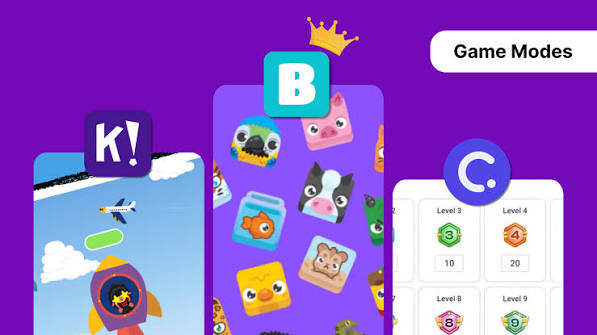
Open Blooket and the first thing you’ll notice is the sheer number of game modes to pick from. Your question set stays constant — say, twenty questions on cell biology — but the mode you choose around it determines almost everything else about how the session feels.
Pick one mode and kids are racing to build the biggest stash of in-game currency. Pick another and they’re defending territory from an opponent’s team. Same twenty questions, wildly different classroom energy. That flexibility is Blooket’s whole identity.
There’s also a collecting layer running underneath all of it — cartoonish little characters students unlock and trade. It’s cosmetic, sure, but don’t underestimate it. Kids trade these things at recess. They ask each other what they got. That’s a level of buy-in a plain leaderboard rarely generates on its own.
The tradeoff is prep time. You’re not just picking questions — you’re picking the right mode for the right group, on the right day, for the right amount of time you actually have. Miss that call and a 25-minute mode eats into a lesson you only budgeted ten minutes for.
Inside a Kahoot Session
Kahoot barely asks anything of you beyond writing or borrowing a quiz. Launch it, share a join code, and the entire class is answering within a minute. No modes, no economy, no extra layer to explain.
The live element is what sells it. Questions appear on a shared screen, answers come in from personal devices, and a leaderboard updates between rounds. It’s the closest thing to a game-show experience most classrooms will ever get, and the format’s familiarity means there’s basically zero ramp-up time.
This is also where Kahoot shines for quick diagnostic purposes. Because every student answers every question in the same simple format, it’s easy to scan results afterward and see exactly which concept the class collectively fumbled.
Where the Real Split Happens
If you strip away the marketing, here’s the actual divide: Kahoot keeps the focus on the question. Blooket shifts the focus to the game.
That single difference cascades into everything else. It’s why Kahoot suits short bursts and Blooket suits longer stretches. It’s why Kahoot gives you cleaner data and Blooket gives you deeper engagement. It’s why a five-minute warm-up feels natural in Kahoot and slightly rushed in Blooket, while a twenty-minute review block feels natural in Blooket and slightly repetitive in Kahoot.
Match the platform to the time slot, not just the subject matter, and most of the “which one is better” debate resolves itself.

The Fun Question
Ask students directly which one they’d rather play, and you’ll get a mix of answers — but Blooket tends to pull ahead among kids who like actual video games. The variety of modes gives it a replay value that a fixed leaderboard format can’t match no matter how good the music is.
Kahoot still wins its own kind of fun, though — the tension of a countdown timer, the scramble to tap the right tile, the drama of a last-second leaderboard flip. It’s a different kind of energy: sharper, louder, shorter-lived. Blooket’s fun is more of a slow burn that can stretch across a whole class period without losing steam.
Competitive Pressure — Not Always a Good Thing
Public leaderboards motivate some students and quietly wreck others. Kahoot puts rankings on display constantly, which works great for kids who like the spotlight and less great for kids who go quiet the moment their name shows up near the bottom.
Blooket’s game mechanics blur that connection a bit. Since outcomes depend on more than just “did you answer correctly,” a shaky round of answers doesn’t always translate into an obviously last-place finish. It’s not pressure-free, but it’s distributed differently — worth keeping in mind if you’ve got students who shut down under visible competition.

Repetition: Where Blooket Pulls Ahead
Some content simply requires drilling — vocabulary, multiplication tables, vocabulary in a foreign language, whatever needs multiple exposures before it sticks. The problem with drilling is that it gets old fast, and a bored class stops absorbing anything useful.
This is Blooket’s strongest use case. Run the exact same twenty questions through five different modes across a month, and it never quite feels like the same activity twice. Kahoot can be reused too, but the format doesn’t shift — by the fourth or fifth run-through, students know precisely what’s coming, and the novelty wears thin.
Assessment: Where Kahoot Pulls Ahead
When the goal shifts from “keep them engaged” to “tell me what they actually know,” Kahoot’s stripped-down structure works in your favor. The data is clean, the breakdown by question is immediate, and there’s no game mechanic muddying whether a wrong answer was about understanding or about strategy.
Blooket can still show performance data, but it was built for engagement first and diagnostics second. If Monday’s lesson plan depends on knowing exactly which concept tripped up your class on Friday, Kahoot gets you a clearer answer faster.
Age Changes the Calculation
Younger students respond to Blooket’s collecting mechanics almost automatically — it’s the same instinct that makes sticker charts and prize boxes work. Kahoot still functions fine at this age since there’s nothing to learn beyond “tap an answer,” but it doesn’t generate quite the same excitement on its own.
Older students — teenagers, even college-age learners — still enjoy both, just for different reasons. Kahoot fits a quick pre-exam review; Blooket fits a longer study session where sustained engagement actually matters. At this age, though, no game layer compensates for weak questions. The content has to hold up on its own merits, gamified wrapper or not.
The Tech Reality Check
Neither platform performs well on a shaky classroom setup. Shared devices, slow Wi-Fi, or an unreliable projector will undercut even the best-designed activity, regardless of which app you’re running. Test your connection before staking a whole lesson on either one.
Screen visibility matters too, especially for Kahoot’s live format. Blooket handles a shared-screen setup fine as well, but it’s worth spending thirty seconds walking students through whichever mode you’ve picked before starting — otherwise you’ll spend the first few minutes fielding confused questions instead of actually playing.
Quick Decision Guide
Go with Kahoot if:
- You’ve got a short window and need something fast
- You want a format students already understand instantly
- You need a clean read on where the class stands
- Live, visible competition fits the moment
Go with Blooket if:
- You’ve got a longer block of time to fill
- You want the same content to feel different each time you use it
- Younger students need an extra hook to stay engaged
- A drawn-out reward system beats a straightforward scoreboard for your group
The Case for Not Choosing at All
Plenty of teachers land on the same answer: keep both in rotation. Open the week with a short Kahoot check-in to see what survived the weekend. Close it out with a longer Blooket session once it’s time to actually drill the material. Switching between formats also keeps either one from becoming background noise — students stay a little more alert when they’re not sure which app is coming next.
Final Take
Both platforms are solving the same underlying problem from opposite ends. Kahoot keeps things fast, familiar, and visibly competitive. Blooket turns the same content into something that plays more like an actual game, built for longer stretches and repeated use.
Need something quick and easy today? Kahoot’s your move. Have time to fill and want engagement that lasts the whole period? Blooket usually delivers more of it.
The real answer, though, isn’t picking a permanent favorite — it’s matching the tool to the moment. The best classroom tech was never about which app has the most features. It’s about which one fits the lesson you’re actually teaching, on the day you’re actually teaching it.